Ballistic Boy's Interstate Options: Reading a Conditional Target
Chris Anderson's October 2019 discussion of Ballistic Boy shows how a local lead-up, distance progression and race-day conditions can shape an interstate campaign.
Historical context from Racing Queensland's 11 October 2019 report. Sydney and Melbourne were possible destinations, not confirmed engagements or present-day plans.
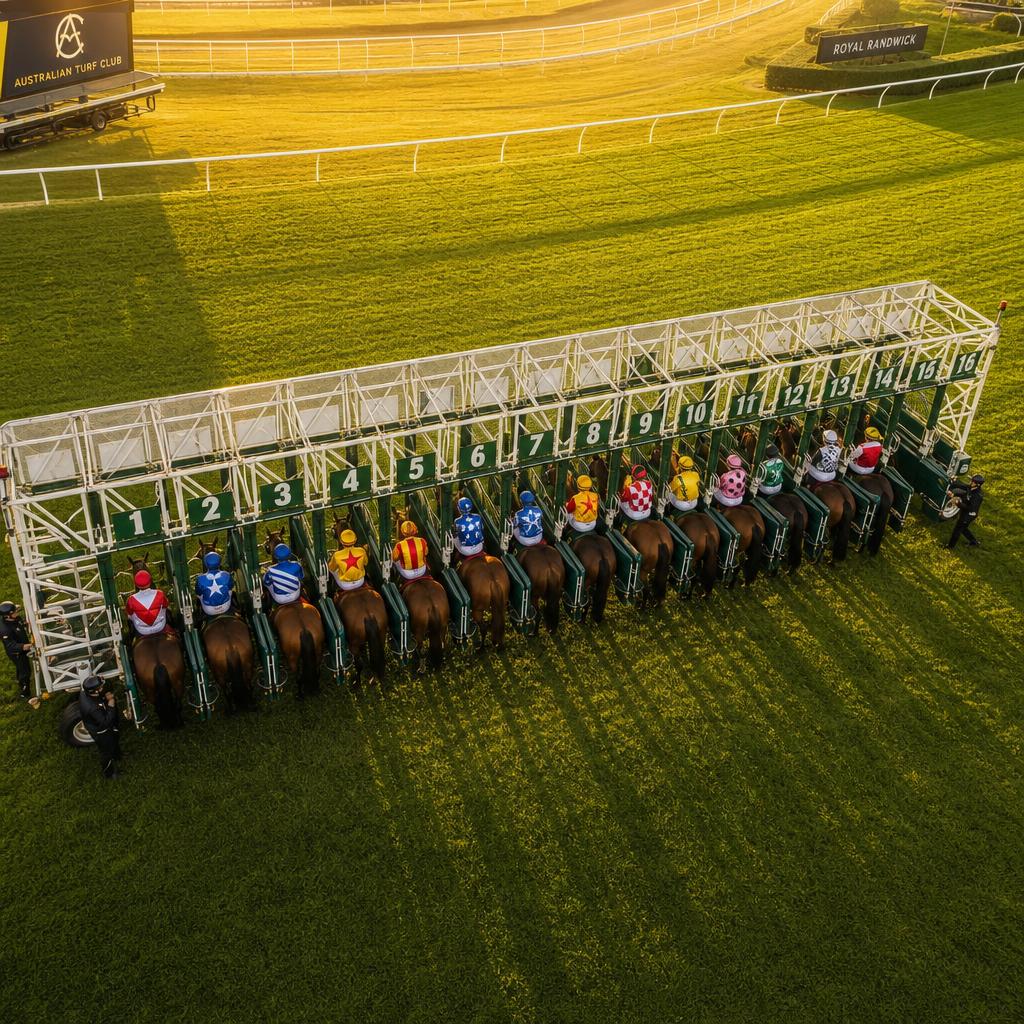
The header uses an illustrative racing photograph, not a photograph of the historical event.
What Anderson actually put on the table
In October 2019, Chris Anderson was considering interstate opportunities for Ballistic Boy if the gelding performed well at Eagle Farm. Racing Queensland's report made the condition clear: a successful run could open the way to Sydney or Melbourne. That is more specific than saying a horse is simply being aimed south. It ties the possible journey to evidence the trainer still wanted to see on the track.
The immediate assignment discussed was a 1400-metre three-year-old handicap. Ballistic Boy had returned with a close second over 1200 metres at Doomben, and Anderson expected the longer trip and Eagle Farm setting to be more suitable. These details belong to that 2019 preparation. They are useful historical context, not a declaration that the same runner or campaign is active at today's meeting.
Distance progression needs a reason
A horse finishing strongly over a sprint can attract calls for a longer distance, but that conclusion needs care. Was it genuinely seeking more ground, or did the race shape allow it to finish past tiring rivals? Consider the entire run, including early position and how much ground the horse covered. A strong last section is relevant evidence, but it is not a complete explanation by itself.
Racing Queensland reported Anderson's view that Ballistic Boy had staying potential and that 1600 metres in Brisbane was another possible step. The trainer's assessment provides context about intention. It does not remove the need to evaluate the actual race when acceptances arrive. A gradual rise in distance can make sense while still leaving questions about the field, tempo and whether the horse will settle comfortably.
Read weight and weather alongside the plan
The report noted a changed weight comparison with Xanthus, the horse that had narrowly beaten Ballistic Boy at Doomben. Such changes are worth recording because they can make an otherwise similar contest a different assignment. Do not turn a weight adjustment into an exact finishing margin, however. Horses do not reproduce their previous effort mechanically, and the pace or surface may have changed as well.
Weather was another uncertainty in the 2019 discussion. The report referred to possible rain and limited evidence about how the Eagle Farm surface would respond. That is a useful example of a trainer acknowledging an unknown. Readers should retain that uncertainty rather than smoothing it away. A positive view about distance or fitness can coexist with a genuine concern about conditions that have not yet been tested.
Treat travel as the next assessment, not a prize
An interstate trip can bring stronger opposition, different race conditions and a new venue. It should not automatically be viewed as proof that a horse has become superior. First establish which race was actually chosen and whether the runner accepted. Then compare the new field on its own terms. The attraction of a Melbourne or Sydney headline is understandable, but a destination name does not tell you how difficult the race will be.
For an honest campaign review, preserve the sequence: what was proposed, what happened in the lead-up and what was confirmed afterwards. Do not join those stages into a success story without checking the missing results. Ballistic Boy's 2019 report is a good lesson in reading conditional language carefully. Use the current racing calendar for today's fields and keep this article as background on how campaign decisions are formed.
Frequently Asked Questions
Were Sydney and Melbourne confirmed destinations in the cited report?
No. Anderson described possible interstate opportunities depending on the Eagle Farm performance. The report was published on 11 October 2019.
What was Ballistic Boy's immediate race distance?
The report discussed a 1400-metre three-year-old handicap at Eagle Farm, following a 1200-metre return at Doomben.
Does stepping up in distance always improve a strong finisher?
No. Pace, position, settling and the new opposition also matter. A strong finish over a sprint is only one part of the evidence.