Billy Egan and Raetihi at Moonee Valley: A Front-Running Lesson
Raetihi's December 2023 Moonee Valley win shows why a wide barrier needs context, and why a narrow margin can still follow a well-judged front-running ride.
A newly written review of the race reported by Waikato Stud on 23 December 2023. Historical statistics below refer to that report, not the horse's current record.
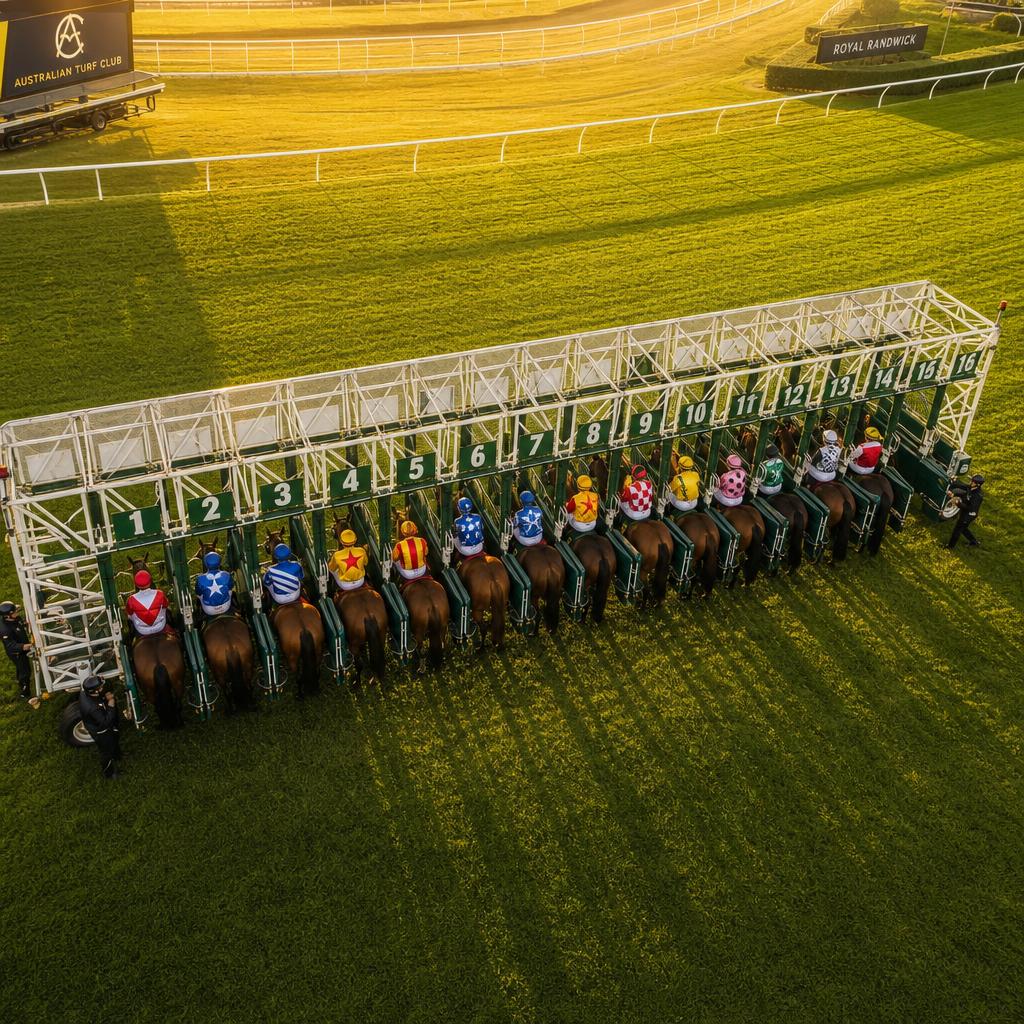
The header uses an illustrative racing photograph, not a photograph of the historical event.
A wide gate did not decide the race
Raetihi's win at Moonee Valley on 23 December 2023 is a good example of why the barrier draw should start a conversation, not end it. Waikato Stud reported that Billy Egan took the gelding forward from a wide gate in the 1600-metre race. Raetihi established the lead, opened a break around the turn and held on by a neck. The winning margin was narrow, even though the ride had put rivals under pressure earlier.
That distinction matters when an old headline says a horse ran its opponents ragged. It describes the impression of a performance, not necessarily a large winning distance. When you revisit a race, check both the result and the replay. A horse can make the running, force others to chase and still finish with only a small advantage. Descriptive language should not replace the measurable details you need for the next assessment.
The horse's preferred style helped explain the ride
The contemporary report included co-trainer Emma-Lee Browne's observation that Raetihi was a strong-willed horse who did not enjoy taking a sit. That provides useful context for Egan's decision to press forward. It is not the same as claiming a front-running ride always gives that horse its best chance. Opposition, early pressure and the energy required to find the lead still matter. A preferred style is one part of the race, not a rule that overrides everything else.
Waikato Stud recorded this as Raetihi's second successive win at the course. At that point his record stood at three victories and nine other top-three finishes from 17 appearances. Those figures belong to December 2023. They help explain the improvement being discussed at the time, but they must not be presented as an up-to-date career summary. A reader looking at a current field needs the latest record rather than numbers preserved in an old news story.
How to review a front-running performance
Start with how much work the leader did before settling. Crossing from a wide position can be expensive if other riders hold their ground, but less demanding if the field gives the runner room. Watch when the lead was obtained and whether the horse relaxed afterwards. Then look at the point where the rider increased the pressure. A horse allowed to build momentum may create a useful advantage before others can respond.
Next, consider what the pursuers were doing. Were they caught behind runners, trying to accelerate from a slower position or simply unable to close the gap quickly enough? A leader's result can flatter or understate its effort depending on those circumstances. Do not automatically mark down a narrow win as lucky. Equally, do not assume a visually commanding move means the winner would reproduce the performance under a different pace scenario.
Use the lesson without copying the selection
For the next race, ask whether the same conditions are likely to exist. Another front-runner in the field may change the early speed. A different trip can alter when the rider needs to commit. Even returning to the same course does not recreate the original contest. Raetihi's historical example is valuable because it shows the relationship between a horse's habits and a rider's choices, not because it supplies an automatic selection years later.
A useful race note might say that a runner was effective when allowed to lead and build momentum before the turn. Add the condition that you want to see a similar opportunity next time. That gives you something testable when the new field is published. It is a much stronger starting point than writing that every wide-drawn leader should be followed. The specific circumstances explain this result; the headline alone does not.
Frequently Asked Questions
How far did Raetihi win by in the race discussed here?
Waikato Stud's 23 December 2023 report records a neck margin over 1600 metres at Moonee Valley, with Billy Egan riding.
Was Raetihi's wide barrier necessarily a disadvantage?
Not automatically. Egan was able to take the horse forward. How much effort a runner uses to find its position matters more than judging the barrier number alone.
Are the career statistics in this article current?
No. The three wins and nine other top-three finishes from 17 starts are the figures in the December 2023 source, included only as historical context.