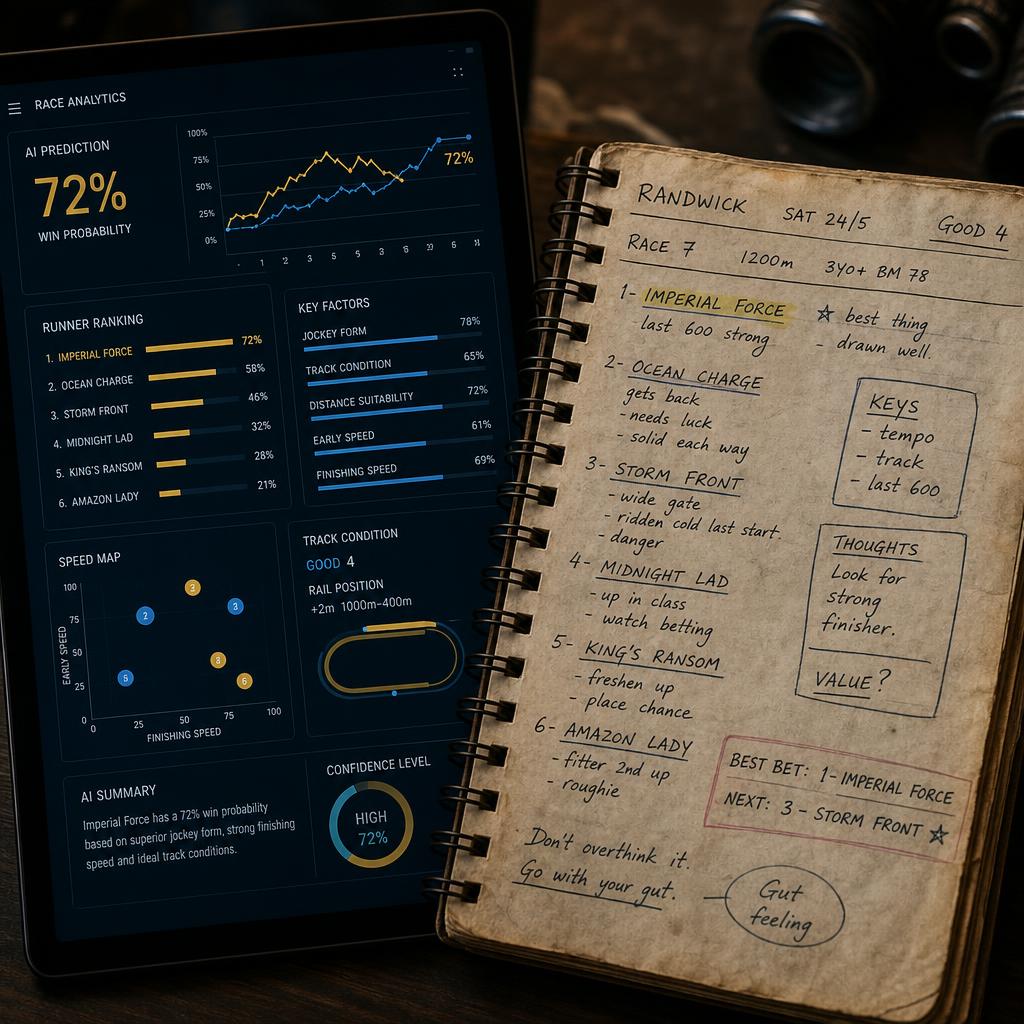
Combining Data and Intuition: A Practical Approach
Why the best punters use both hard data and their own racing knowledge.
The best Australian punters don't choose between data and intuition - they use both. Sophisticated modelling identifies the statistical edge; trackside knowledge and situational awareness fine-tune the final decision. Here's how to build a framework that combines them effectively.
1,200+
Variables Racing Ready processes per runner
~5%
Races where late human information overrides the model
2x
Improvement in results when data and intuition are combined vs either alone
What Data Gets Right
Algorithmic models excel at processing large volumes of historical information without emotion. They don't fall in love with a horse's name, ignore a bad barrier draw because they like the trainer, or overreact to a single impressive win. Racing Ready's model processes every runner's last 12 starts, track and distance records, jockey/trainer combinations, and current market position - consistently, across every race.
What Data Can't Always Capture
Horse racing involves living animals, which means unexpected information emerges at the track that no dataset can pre-empt. Experienced observers pick up on these signals before they're reflected in the market.
Mounting yard behaviour: a horse that is sweating profusely, difficult to handle, or repeatedly refusing to load is burning energy before the race starts.
Late jockey change: a top jockey jumping off a well-fancied runner is often the most reliable bearish signal in racing.
Gear changes: blinkers added or removed at the last moment suggest the stable is experimenting - which can go either way.
Sudden weather shift: Heavy rain in the 30 minutes before a race can fundamentally change the track condition from what was posted at market open.
A Three-Step Hybrid Approach
Step 1 - Let the AI Do the Heavy Lifting
Upload your race card screenshot and get Racing Ready's top-3 picks with probability scores and value ratings. Use this as your baseline - the statistical shortlist of runners worth considering.
Step 2 - Apply Trackside Observation
Check the mounting yard and barrier trials for any of Racing Ready's flagged runners. Does the horse look well? Is the jockey confident? Are there any last-minute gear or barrier changes? This step takes five minutes and can save you from backing a horse that clearly isn't right on the day.
Step 3 - Make the Final Call
If your observation confirms the AI's top pick, back it with confidence. If something looks off with the model favourite, check whether the second or third pick still has a strong value score and back that instead. Never override the model without a specific, observable reason.
Use the model to eliminate - not to blindly select. Then let your eyes make the final decision.
Frequently Asked Questions
How much should I trust the AI versus my own judgment?
Start by following the AI's recommendations for your first 50 bets. Track your results. Then review where your overrides improved or hurt your returns. Most punters find their intuition adds value 10–20% of the time.
What if the AI and my gut strongly disagree?
A significant divergence is worth investigating. Check whether there's a specific factor - like a late barrier draw, a jockey switch, or a track condition change - that would explain it. If you can identify a concrete reason, trust your observation.
Can I use Racing Ready without being at the track?
Absolutely. Most Racing Ready users analyse races from home using screenshots from TAB or Racing.com. The mounting yard observations are a bonus layer, not a requirement, for using the platform.